Does food have a grip on you?
Hey there, beautiful. It’s Coach Monica, and today, I’m diving deep into something that’s close to my heart—and probably yours too. If you’ve ever felt like food has a grip on you, like it’s controlling your life instead of the other way around, this is for you. I’ve been there. I know the struggle, the shame, and the frustration. But I also know the freedom that’s waiting on the other side.
So, let’s talk about food addiction and eating addiction—what they are, how they’re different, and most importantly, how you can break free. (full disclosure: I have a seat at the table with both sides of this trap)
This isn’t going to be easy to hear. Addiction never is. But I promise, I’m here with you, and together, we can face the hard truths and find a way forward.
A Story We All Know Too Well
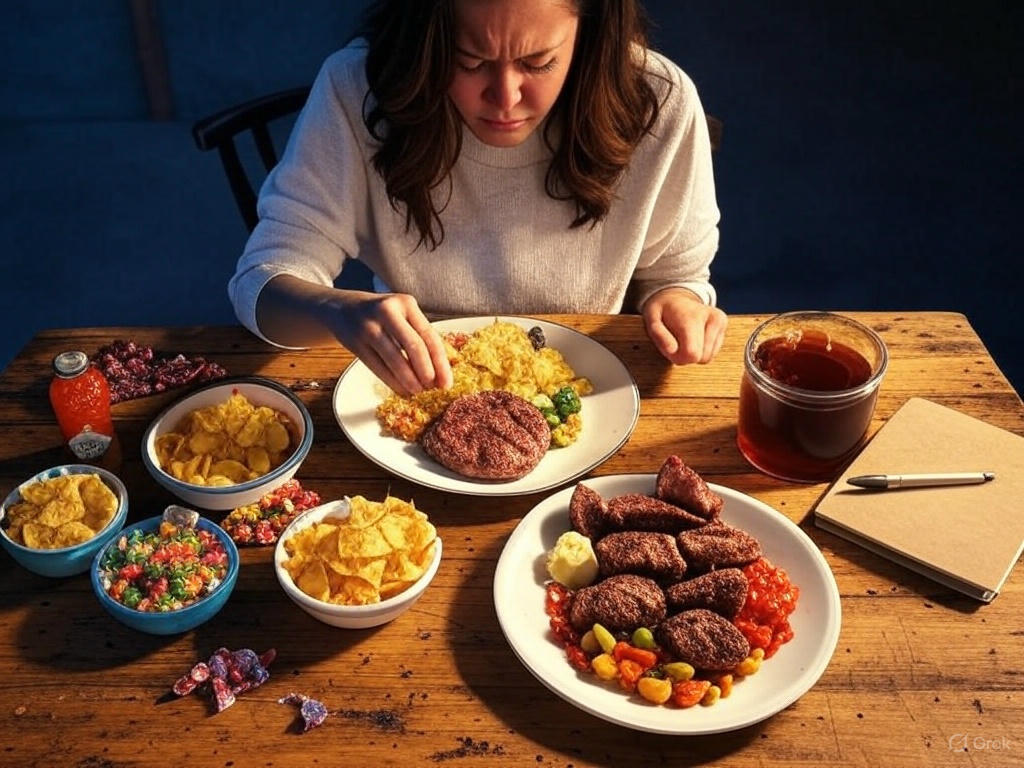
Picture this: It’s been a long, stressful day. You’re exhausted, overwhelmed, and all you want is to feel better. So, you reach for that bag of chips or that pint of ice cream. Before you know it, it’s gone—and you’re left feeling worse than before.
Sound familiar? Or maybe it’s not even about the food itself. Maybe you find yourself eating just to fill a void, to numb the emotions you don’t want to face. That’s the difference between food addiction and eating addiction, and understanding it is the first step to breaking free.
I’ve walked this path myself. There was a time when sugar felt like my best friend and my worst enemy all at once. I’d crave it, binge on it, and then hate myself for it. But here’s the thing: it wasn’t just about the sugar. Sometimes, it was about the act of eating—using food to cope with stress, sadness, or even boredom. There are some days I find I could over eat a pile of Brussel sprouts! (Weird, I know) If you’re nodding along, know this: you’re not alone, and you’re not broken. You’re human. And there’s a way out.
Food Addiction: The Chemical Pull You Can’t Ignore
Let’s start with food addiction. This is when your brain is hooked on specific foods—usually the ones loaded with sugar, salt, or unhealthy fats. It’s not just “liking” these foods; it’s craving them in a way that feels out of control. Your brain’s reward system lights up like a Christmas tree when you eat them, releasing dopamine and making you feel good… temporarily. But just like with drugs or alcohol, the high fades, and you’re left wanting more.
Here’s the hard truth: food addiction is real, and it’s powerful. Studies show that up to 20% of people may struggle with it, and for those with binge eating disorder, that number can be as high as 77%. It’s not about willpower; it’s about brain chemistry. That’s why moderation doesn’t work. You can’t “just have one bite” any more than an alcoholic can “just have one drink.” It’s all or nothing, and for me, that means zero sugar, zero processed junk. That’s the foundation of my ketogenic approach—it cuts out the addictive foods so you can finally break free.
Eating Addiction: When Food Becomes Your Emotional Escape
Now, let’s talk about eating addiction. This one’s different—and in some ways, even trickier. Eating addiction isn’t about the food itself; it’s about the act of eating. It’s a behavioral addiction. It’s when you turn to food to cope with emotions—stress, loneliness, anxiety, even happiness. You might not even crave a specific food; you just need to eat something, anything, to feel better. It’s a behavior, a habit, a way to numb or distract yourself from what’s really going on inside.
I remember nights when I’d sit on the couch, not hungry, but eating anyway because I was stressed about work or feeling lonely. It wasn’t about the food; it was about the comfort, the routine. And that’s the thing with eating addiction—it can happen with any food, even the healthy stuff. You could be bingeing on carrots or kale chips, but if it’s driven by emotions, it’s still a problem.
Here’s the hard truth: you can’t out-diet an emotional problem. No amount of keto or clean eating will fix it if you don’t address the root cause. That’s why my program includes Cognitive Behavioral Therapy (CBT) exercises—to help you untangle the emotional knots that keep you stuck in these patterns.
The Overlap: When You’re Battling Both
Now, here’s where it gets really tough: many of us are dealing with both food addiction and eating addiction at the same time. You might crave sugary foods because of the chemical pull and also use eating as a way to cope with emotions. It’s like being hit from two sides, and it can feel impossible to break free.
But here’s the hope: you can tackle both. It takes work—hard, honest work—but it’s possible. I’ve seen it in my clients, and I’ve lived it myself. One of my clients, Sarah, came to me addicted to sugar and emotionally eating every night. She felt hopeless, like she’d never escape. But with a structured ketogenic plan to cut out the addictive foods and weekly CBT exercises to address her emotional triggers, she transformed. Three months later, she was 20 pounds lighter, but more importantly, she felt free—mentally, emotionally, and physically.
The Hard Truths You Need to Hear
I’m not here to sugarcoat things (pun intended). If you’re struggling with food or eating addiction, there are some hard truths you need to face:
- Moderation doesn’t work for addiction. Period. You can’t “just have a little” if your brain is wired to crave more. It’s like asking a smoker to have “just one cigarette.” It’s all or nothing, and for most of us, that means cutting out the addictive foods completely.
- You can’t outrun your emotions with food. If you’re eating to cope, no diet will fix that. You have to face what’s driving you to the fridge—whether it’s stress, loneliness, or past trauma. It’s not easy, but it’s necessary.
- You need a plan, not just willpower. Willpower fades, especially when you’re tired, stressed, or emotional. That’s why my program includes a structured ketogenic diet to eliminate cravings and CBT exercises to build new coping skills. It’s not about being perfect; it’s about being prepared.
But here’s the flip side: you are stronger than you think. You’ve already taken the first step by reading this, by admitting that something needs to change. That takes courage, and I’m so proud of you for that.
How I Help: A Program Built for Real Change
At KM Health Coaching, I don’t just throw a diet plan at you and hope for the best. I’ve been where you are, and I know what it takes to break free. My 3-month program is designed to tackle both the physical and emotional sides of addiction:
- Ketogenic Diet: We cut out sugar and processed carbs completely to break the chemical addiction. You’ll eat real, nourishing foods like steak, butter, and bone broth—foods that fuel your body without triggering cravings.
- CBT Exercises: Each week, we work on practical tools to rewire your brain. From thought records to urge surfing, these exercises help you manage emotional triggers without turning to food.
- Support Systems: You’re not alone. I recommend groups like our Overeaters Support group for community support, and you’ll have me (or Coach Darcy!) cheering you on every step of the way.
We start with a thorough screening process, using tools like the Yale Food Addiction Scale and the Addiction-like Eating Behavior Scale, to understand exactly what you’re dealing with. From there, we create a plan tailored to you—because your journey is unique, and you deserve a solution that fits.
Hope is Real: You Can Break Free
I know it feels impossible right now. I know the shame, the guilt, the feeling that you’ll never escape. But let me tell you something: freedom is possible. I’ve seen it in myself, in my clients, and I see it in you. One of my clients, Brenda, used to cry herself to sleep after every binge. She thought she was broken beyond repair. But after 12 weeks of working together, she sent me a photo of herself hiking—a dream she’d given up on because of her weight and shame. She was glowing, not just because of the weight she’d lost, but because she’d found herself again.
You can too. It won’t be easy, but it will be worth it. And I’ll be with you every step of the way.
Ready to Take the First Step?
If you’re tired of feeling trapped by food, if you’re ready to face the hard truths and do the work, I’m here for you. Book a free consultation with me or Coach Darcy today, and let’s talk about how we can help you break free. You don’t have to do this alone.
Click here to book your free consultation: https://kmhealth.ketomomcoaching.com/holistic-food-recovery-and-addiction-center/
Remember, you are stronger than your cravings, braver than your fears, and more capable than you know. Let’s do this together.
With love and tough love,
Coach Monica 💖
 THE KETO IDENTITY
Leave a comment